
Welcome to the Lara-Gonzalez lab!
Mechanisms of cell division in development and cancer
To control the progression of cell cycle events, animal cells employ a dynamic decision-making web that integrates inputs such as cell size and metabolic status with checkpoint signaling, and damage sensing. In multicellular contexts, intrinsic and extrinsic developmental cues and organismal physiology also feed into the decisions to proliferate, quiesce or differentiate. The circuits that integrate cell-intrinsic and extrinsic information to control cell cycle progression and regulate transitions to and from quiescent states are at the frontier of current research.
The overarching goal of our lab is to elucidate the molecular mechanisms governing cell cycle transitions and their coordination with developmental processes. Our long-term goal is to advance our understanding of fundamental biological processes and to identify potential therapeutic targets for over-proliferative disorders such as cancer.
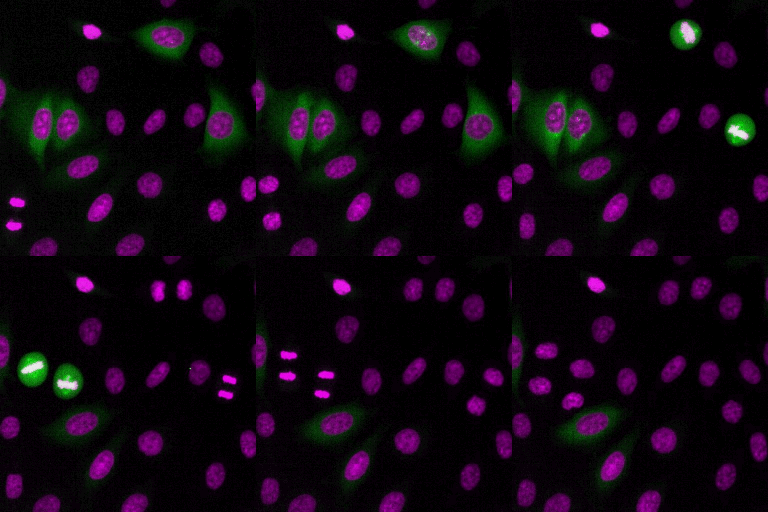
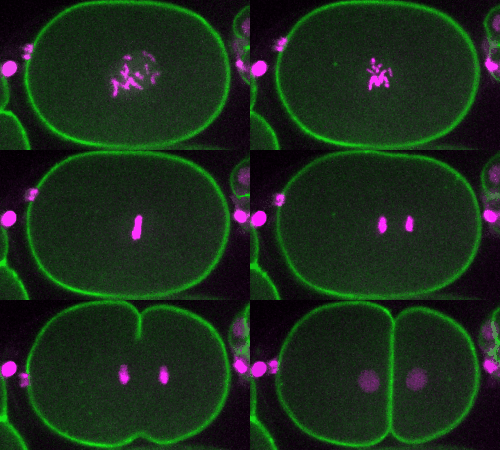
We employ two systems in our research:
- The nematode C. elegans, for genetics and developmental analyses
- Human tissue cultured cells, to explore pathway conservation and potential selectivity for targeting in cancer.
Our approach uses a combination of cell biology, genomic editing, microscopy and biochemistry to understand how cell cycle decisions are regulated from a mechanistic perspective.

Pablo Lara-Gonzalez, PhD
Assistant Professor
University of California, Irvine
Dunlop School of Biological Sciences
Department of Developmental and Cell Biology
Bluesky: @xtpablo
